
The most significant revolution in live music isn't happening on stage—it's happening in the milliseconds between sound leaving the speakers and reaching the audience. Emerging industry trends suggest the "best" concert experience could increasingly be defined by systems that **listen, learn, and adapt** in real time, complementing human crews rather than replacing them—though adoption timelines remain uncertain.

**BLUF:** **AI sound systems are turning concerts into responsive environments**—auto-correcting mixes, synchronizing lighting and visuals to audio, and enabling interactive moments that brands can sponsor without feeling bolted on. For CMOs, this represents a potential new media surface: **an adaptive stage that could personalize impact at scale** while reducing production friction across tours, festivals, and branded events.

## Real-time AI mixing shifts live sound from reactive fixes to predictive optimization

The live mix has always been a high-wire act: shifting acoustics, crowd density, venue geometry, and performer variability—all under time pressure. Traditional workflows rely on educated guesses during soundcheck, then rapid troubleshooting once the room fills.

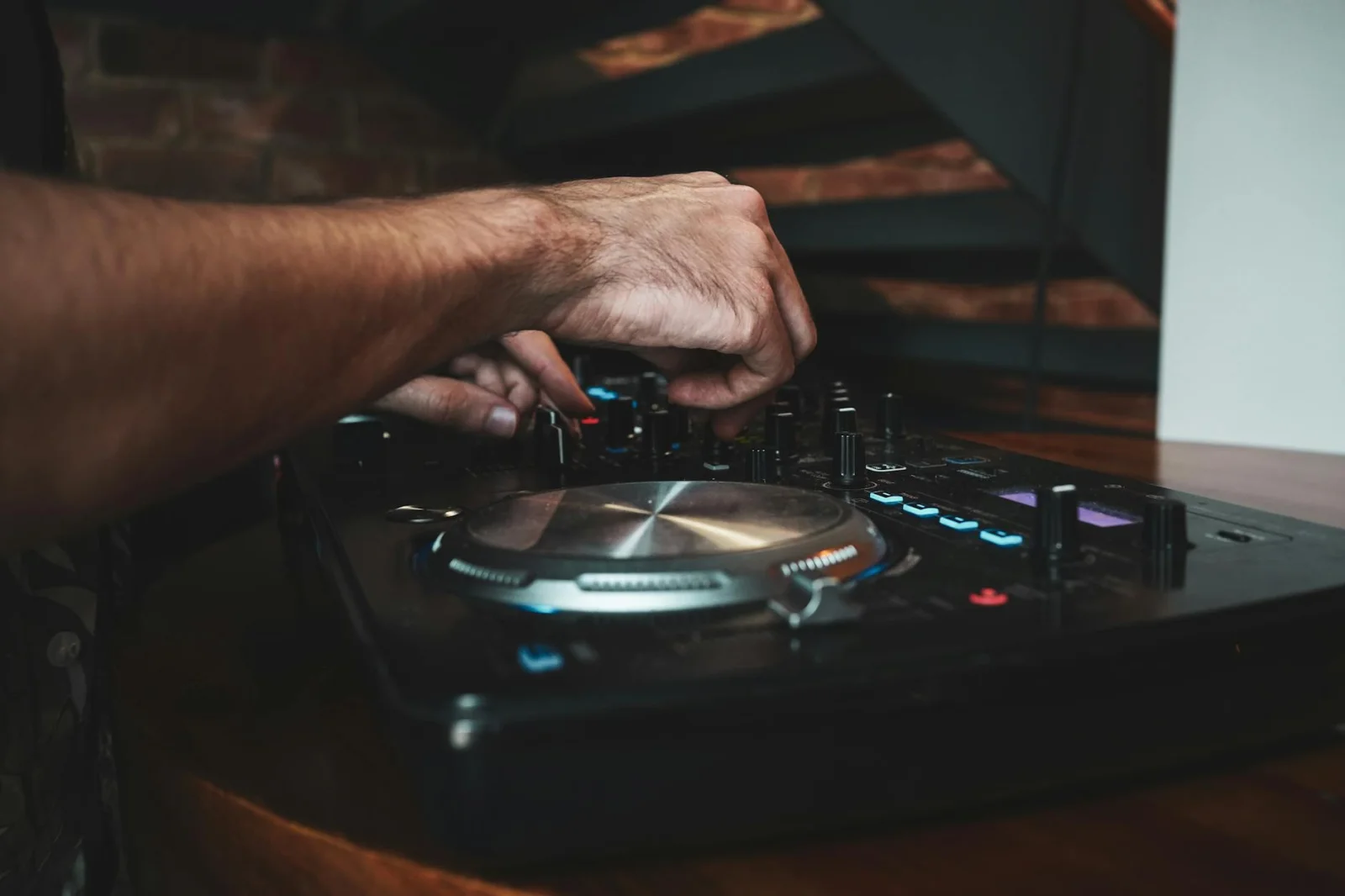
AI-assisted systems are changing that rhythm. Industry analysts note that AI-powered systems can analyze live mixes in real time, automatically detecting phase issues, EQ imbalances, and level mismatches. In practice, that means problems can be flagged—and in some setups corrected—before the human ear even registers them.

For marketing leaders, this isn't audio trivia; it's **experience reliability**. When the mix translates consistently from VIP to upper bowl, brands may reduce the risk that a sponsored moment (a product reveal, an artist shoutout, a timed visual) lands in one section and falls flat in another.

Investment momentum supports the shift. According to multiple industry research reports, the global AI in music market is projected to experience substantial growth over the next decade, with some estimates suggesting a compound annual growth rate exceeding 20% through 2033. Even if your brand isn't "in music," your campaigns increasingly are—because many live events are evolving into content-generation opportunities with higher expectations for repeatability.

*Note: Market projections are estimates based on current trends and may vary across research sources.*


<figure class="article-embedded-image">
  <img src="/images/newsroom/05847199-7185-4c11-87d8-36adf853076f_embed_0_20251216_164249_c89e3005.webp" alt="Overhead view of closed notebook with pen and coffee cup on wooden desk" loading="lazy">
</figure>


## Audio, lighting, and visuals are converging into one adaptive canvas brands can design against

Concert production used to run on parallel tracks: audio teams mix sound, lighting teams program cues, and visuals run on prebuilt timelines. AI is compressing those tracks into a single responsive system where **music can drive visuals** (and sometimes visuals can influence mix decisions) in real time.

Industry observers note that in live performances, AI is being used to generate reactive visuals that sync with the music while optimizing live sound in real-time. For brands, the opportunity is new inventory: reactive, in-the-moment "signature scenes" that feel native to the performance, not like an interruption.

Some production technology vendors are developing lighting control approaches that respond dynamically to audio features—tempo, intensity, and spectral energy—rather than fixed timecode. The strategic unlock could be **designing sponsorship as a system behavior**, not a static placement: a colorway that blooms on chorus drops, a visual motif that appears only when crowd energy crosses a threshold, or a branded interstitial that adapts to the setlist's mood.

Industry reports indicate that some large-scale events are exploring AI-enabled production workflows in 2024–2025, reflecting what may be a broader shift from experimental rigs to higher-visibility environments. The marketing implication: adaptive production could become a planning assumption rather than a novelty request as these tools mature.

> **Key Insight:** The next generation of experiential marketing may not "add" branding to concerts—it could **compose** branding into the show's real-time audio-visual system.

## Interactive engagement becomes measurable when the venue behaves like a programmable channel

The most valuable evolution isn't just better sound—it's **feedback loops**. When systems can respond to room acoustics, performance dynamics, and crowd intensity, the audience experience becomes adjustable moment by moment.

That opens a more credible path for interactivity. Instead of one-size-fits-all "crowd participation," brands can sponsor segmented experiences: zones tuned for clarity vs. bass impact, moments of spatial immersion that trigger only in specific sections, or synchronized effects timed to musical features that reliably create "recordable" peaks for social.

Measurement may improve when the show is instrumented. According to production technology vendors, telemetry from sound systems and lighting stacks could potentially help sponsorship move beyond traditional impressions toward experience quality metrics—consistency, responsiveness, and repeatable moments that film well—though standardized measurement frameworks are still emerging.

Early indicators suggest that brands may differentiate by engineering seamless, responsive moments, rather than simply pursuing volume-based sponsorship approaches. When the environment adapts, subtlety could outperform saturation.

## AI-generated audio assets compress content timelines for campaigns before, during, and after the show

Concert tech evolution doesn't stop at the venue doors. The same AI capabilities influencing live sound—analysis, synthesis, and rapid iteration—are reshaping how brands produce audio for recap videos, podcasts, live streams, and branded interstitials.

AI mastering is a practical example. Leading online mastering platforms can now deliver professional-quality results in minutes, accelerating turnaround for creators and teams working under tight timelines. For marketing orgs, faster mastering can reduce bottlenecks in post-production—especially when you're shipping dozens of cutdowns across regions and channels.

Generative and neural approaches are also expanding what's possible creatively. Recent research into real-time neural audio models explores ways to blend live and synthesized timbres for new performance textures. The marketing angle isn't novelty for its own sake; it's **brand-owned sonic identity** that could potentially be recomposed for different formats—arena playback, short-form video, or livestream stingers—with less manual rebuilding.

If your 2025–2026 experiential roadmap assumes the stage is static, you could be overlooking emerging opportunities in adaptive production technology, as adoption patterns continue to evolve.

**Key Takeaways:**
- **Design** sponsorships as adaptive "moments" triggered by audio and crowd dynamics, not static placements.
- **Instrument** live experiences with telemetry and cue logic so brand impact can be evaluated with experience-quality metrics, not just impressions.
- **Streamline** content pipelines by using AI-assisted mastering and audio generation to accelerate post-event cutdowns and multi-channel distribution.

Live music is moving toward environments that can sense and respond in real time—creating a new layer of programmable media inside the venue. As industry analysts project continued investment in AI for music workflows, a growing number of tours and events could treat adaptive sound-and-visual systems as standard infrastructure rather than premium add-ons.

*Forward-looking statements about market growth and technology adoption are based on current industry analysis and are subject to change.*

The question for marketing leaders may be less about whether concerts will adopt more AI, and more about whether your team is prepared to brief, buy, and measure experiences where the stage behaves like software—assuming adoption trends continue. What would you sponsor if the show could adapt your brand moment to every room, every night?
Marketing News
AI Sound Systems Transform Concert Venues Into Responsive Media Surfaces
AI sound systems are revolutionizing live concerts by adapting mixes in real-time and creating interactive experiences that brands can leverage as a new marketing surface.
6 min read
You May Also Like
Research Brief
Audience intelligence updates
Research Brief
Audience intelligence updates
Compare more hypotheses before live testing.
Use AI-generated audience reactions to choose what deserves real-world validation.
Get Started