
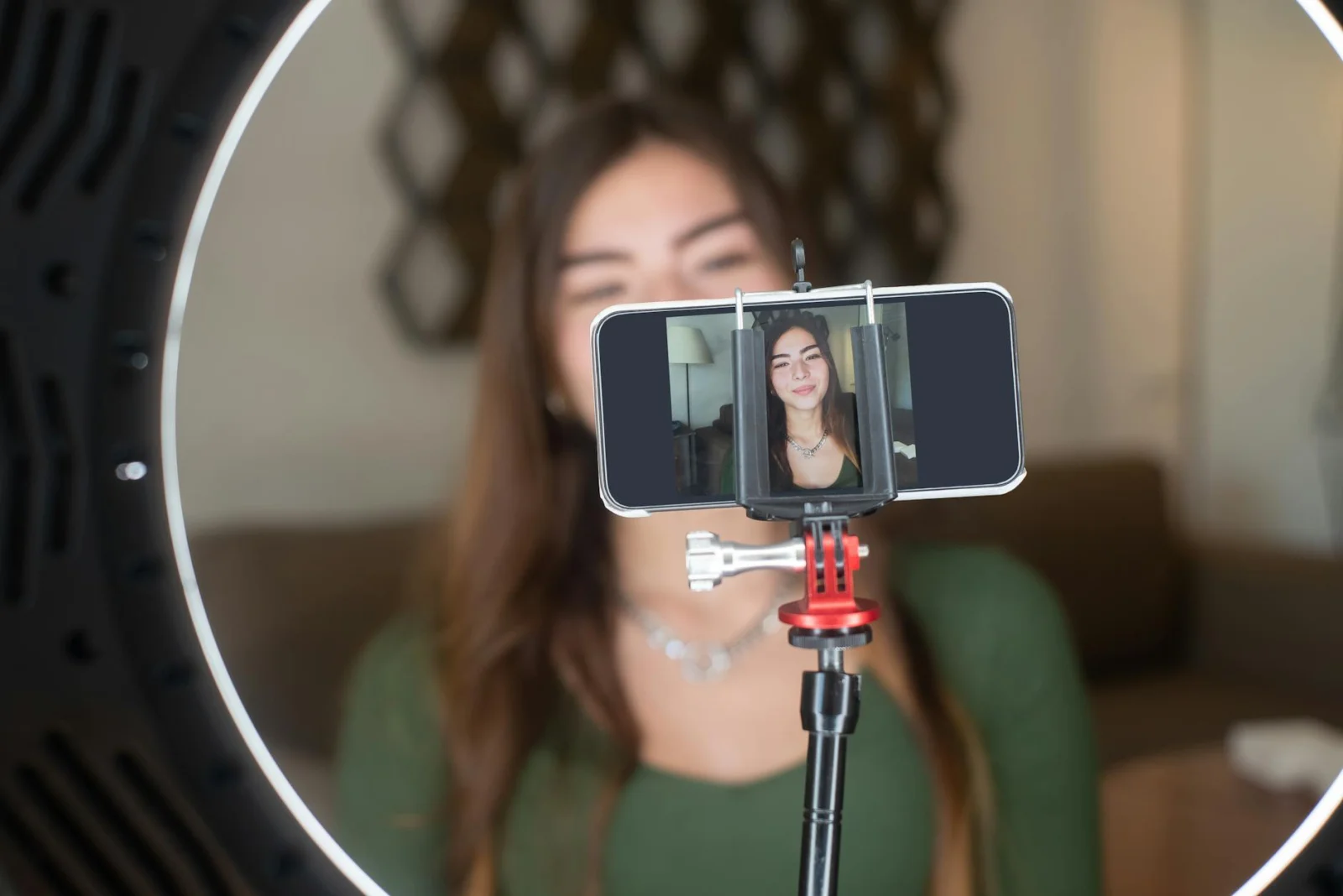
What if the fastest way to grow social commerce isn't hiring a celebrity—it's hiring 50 "regular" creators your customers actually trust?
And what if your influencer budget is currently optimized for reach… when the real lever is conversion?
BLUF: Micro- and nano-influencers are beating mega-influencers on engagement, trust, and ROI—especially in shoppable, creator-led commerce. If you want to capitalize on the growing social commerce market, your strategy should look less like "one big sponsorship" and more like a repeatable creator pipeline.
Why micro beats mega: engagement isn't a vanity metric anymore
Here's the key insight: social commerce turns attention into transactions. That means engagement quality matters more than raw impressions.
Micro-influencers consistently outperform mega creators on engagement across major platforms. According to Influencer Marketing Hub's benchmark data, average Instagram engagement rates for micro-influencers range from 3.86%–6% versus ~1.21%–1.97% for mega-influencers Source. On TikTok, industry reports indicate micro creators can achieve significantly higher engagement rates than mega accounts, though exact figures vary based on measurement methodology and content category Source.
That gap isn't "nice to have." In a shoppable feed, it's the difference between a product getting saved/shared/commented on (signals that drive distribution) and getting scrolled past.
The budget shift is already happening—and accelerating
If you're still treating micro-influencers as a side experiment, you're late—but not too late.
According to Influencer Marketing Hub's 2024 benchmark report, 70% of brands prefer nano/micro creators over macro/mega (with 44% preferring nano and 26% preferring micro) Source. The same report notes nano creators make up 75.9% of Instagram influencers, while micro creators are 13.6%—and brands are increasingly expanding their micro-influencer rosters year over year Source.
Translation: the supply is massive, the playbooks are maturing, and the brands building systems (not one-off activations) are stacking compounding returns.

Social commerce runs on trust—and micro creators feel like peers
You can't "brand message" your way into social commerce. People buy when they believe.
Consumer research has consistently shown that people trust recommendations from peers and relatable voices more than traditional brand advertising—a principle reinforced by influencer marketing studies showing the 70% brand preference for nano/micro creators cited above. Micro and nano creators sit closer to that peer zone: they're niche, consistent, and perceived as more relatable than a celebrity reading a caption.
That trust shows up in behavior: creators can drive product discovery and reduce purchase anxiety through demos, comparisons, and comment-section Q&A—exactly the stuff product pages rarely do well.
A real-world model: beauty brand creator ecosystems (and why they work)
Want a clean example of the "many small bets" approach? Look at how leading beauty retailers have built creator ecosystems, where product discovery is fueled by thousands of beauty enthusiasts and creators posting routines, reviews, and tutorials.
This isn't about one face of the brand. It's about a repeatable loop:
- creators generate credible content,
- audiences ask questions and see real usage,
- products move through consideration faster.
That's social commerce: content that behaves like sales enablement.
Key Insight: Social commerce scales when you stop "renting reach" and start building a creator pipeline that produces trusted proof—every week, in every niche you sell into.
How to build a micro-influencer social commerce engine (not a one-off campaign)
Start with structure. Otherwise you'll drown in DMs and spreadsheets.
First, segment creators by job-to-be-done: education (how-to), validation (reviews), and activation (discount/affiliate). Then standardize deliverables around shoppable formats: short demos, "3 reasons I kept it," side-by-side comparisons, and comment replies.
Second, build measurement that maps to commerce. Track CTR, CVR, CAC, and creator-level ROAS via affiliate links, platform shops, and unique codes. Industry benchmarks suggest well-executed influencer programs can deliver strong ROI, though results vary significantly based on industry, creator selection, content quality, and execution. Your mileage will depend on your specific implementation Source.
Third, make it ongoing. Social commerce rewards repetition. Your best-performing creator this month is often your best-performing creator next month—because trust compounds.
Key Takeaways:
- Shift budget from single large sponsorships to a diversified roster of micro/nano creators tied to specific product categories.
- Operationalize a pipeline (recruit → brief → publish → measure → renew) so performance compounds instead of resetting every campaign.
- Measure for commerce outcomes (
CVR,ROAS,CAC), not just reach and likes.
The next wave of social commerce winners likely won't be the brands with the biggest influencer splash. They're more likely to be the brands with the most disciplined creator system—one that turns authentic content into predictable revenue.
If you had to prove ROI in 60 days, which product line would you build your first micro-influencer pipeline around—and what would you stop doing to fund it?