
The generation that grew up with infinite streaming libraries is now spending $30+ on a single album they can’t “skip,” shuffle, or instantly share. In 2024, U.S. vinyl record sales hit **43.6 million units**, a modern-era record that would’ve sounded impossible when the format was near its low point in the mid-2000s, according to the *RIAA*’s year-end music revenue reporting ([RIAA](https://www.riaa.com/)).

**BLUF:** Vinyl’s rise isn’t a quirky nostalgia story—it’s a playbook for **pricing power**, **collectible scarcity mechanics**, and **community-led retail** in a world dominated by digital distribution. For CMOs, the lesson is clear: Gen Z doesn’t just buy products—they buy *identity media* that’s ownable, displayable, and ritual-driven.

## The numbers behind vinyl’s 18-year expansion arc (and why marketers should care)

Vinyl is no longer a side category; it’s a premium tier with real revenue weight. According to the *RIAA*’s 2024 reporting, vinyl generated **$1.4 billion** in the U.S., surpassing CDs at **$541 million**; unit volume also led with **43.6 million vinyl units** versus **33 million CD units** ([RIAA](https://www.riaa.com/)).

That performance also extends the format’s durability: the *RIAA* notes **18 consecutive years of growth** for vinyl ([RIAA](https://www.riaa.com/)). That’s not a fad curve—it’s an adoption arc with enough time in-market to create repeatable go-to-market patterns: limited drops, premium packaging, and retail moments that function like launches.

The forward view suggests continued upside, with important caveats. Projections from **Statista’s 2024 vinyl market analysis** suggest 2025 **may** reach **46–48 million units** and **$2.4 billion** in U.S. sales; by 2030, industry forecasters **predict the market could** reach **55–60 million units** and approach **$3.8–$4.2 billion** ([Statista](https://www.statista.com/)). Treat those figures like scenario planning, not a guarantee—but the direction is hard to ignore.


<figure class="article-embedded-image">
  <img src="/images/newsroom/c37bb425-16d1-44c2-99a3-dd9e591acdb9_embed_0_20251216_164613_4c5fc971.webp" alt="Face-down smartphone next to succulent plant and closed journal on wooden desk" loading="lazy">
</figure>


## Why Gen Z is buying: ritual + scarcity + aesthetics + community proof

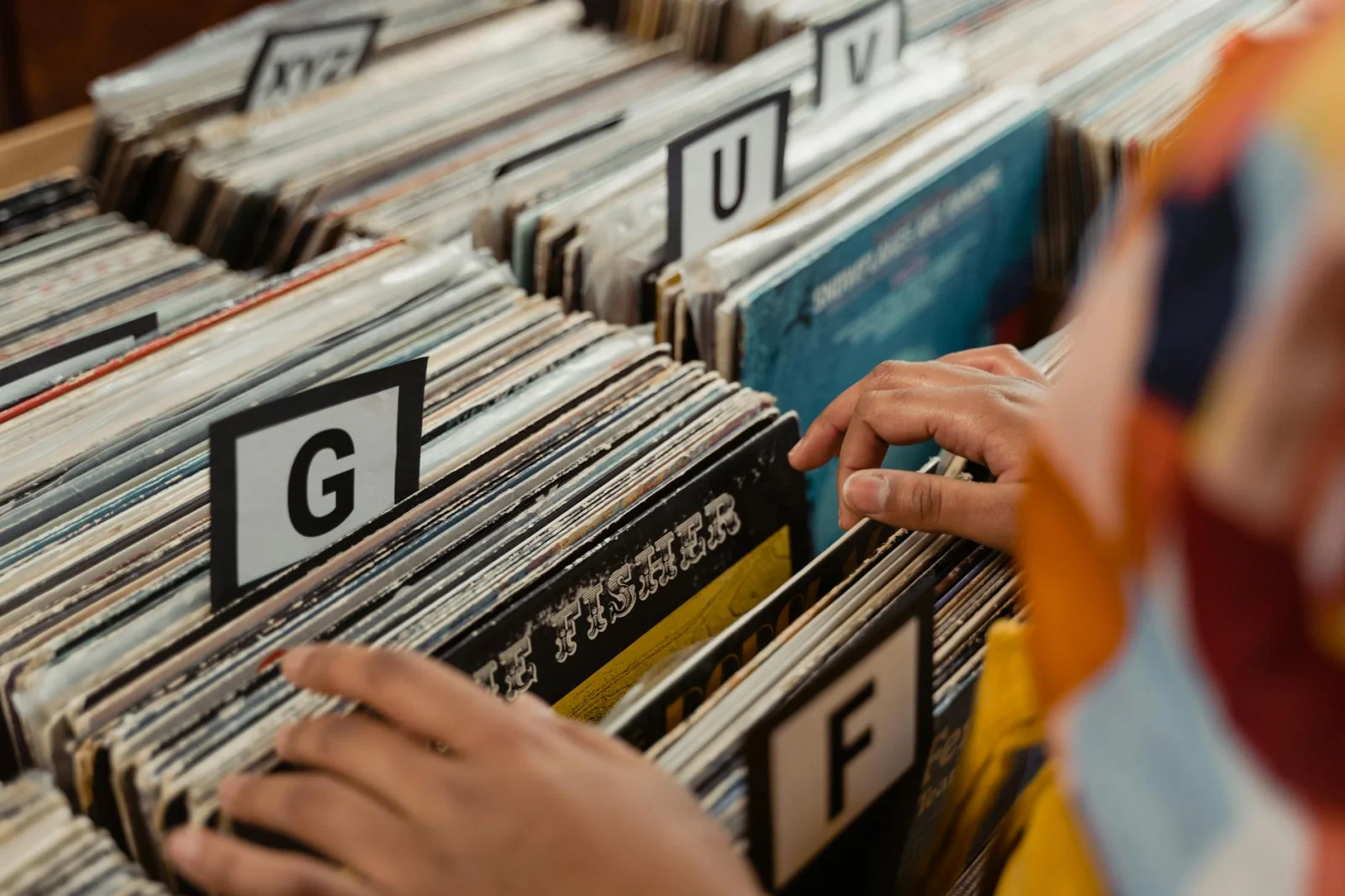
If streaming “solved” music access, vinyl solves something else: meaning. The purchase isn’t just audio—it’s a physical artifact that signals taste, belonging, and attention. That’s why **collectibility and ownership** matter: a record is merchandise, décor, and proof-of-fandom in one.

The best proof is in the behavior around major releases. Taylor Swift’s *The Tortured Poets Department* moved **500,000+ vinyl units** in 2024, demonstrating that fans will pay for a physical edition even when the music is available on streaming, according to industry sales reporting cited in the research brief ([RIAA](https://www.riaa.com/)).

Social platforms amplify this because vinyl is inherently visual: gatefold art, color variants, and “shelfie” culture turn the product into content. And when content is native to the product, **the product becomes the ad**—reducing paid pressure and increasing organic spread.

> **Key Insight:** When digital access is abundant, Gen Z pays a premium for *ownership, display value, and ritual*—and those three levers can be engineered in categories far beyond music.

## Independent retail is winning because Gen Z is rebuilding commerce around community

The unexpected hero of the vinyl boom is the indie record store—not as a relic, but as a community channel. **Indie retailers captured 40% of total vinyl sales in the second half of 2024**, according to **Luminate’s year-end music reporting** referenced in the research brief ([Luminate](https://luminatedata.com/)).

That matters to marketing leaders because it challenges a common assumption: that younger buyers only want frictionless, lowest-price checkout. In vinyl, “friction” is the feature—browsing crates, asking for recommendations, and lining up for drops creates a narrative worth sharing.

Record Store Day is the clearest example of retail-as-media. **Record Store Day 2025 saw 1.2 million albums sold (over 1 million vinyl)**, including **553,000 exclusive RSD albums** and **120,000 singles**, according to figures cited in the research brief from industry tracking and event reporting ([Luminate](https://luminatedata.com/)). The takeaway isn’t just volume; it’s that **eventized retail** can still manufacture attention at scale.

For brands outside music, the analog is straightforward: create a reason to show up in person—then make the moment collectible.

## Watchouts: the market is maturing, and tentpole dependence is real

The vinyl story isn’t uniformly up and to the right. Early 2025 signals a possible cooling at the margin. **U.S. Q1 2025 vinyl units totaled 22.1 million, down 1% year over year**, according to **Billboard’s Q1 2025 music sales reporting** referenced in the research brief ([Billboard](https://www.billboard.com/)). The same reporting notes CDs declined more sharply—**down 22%**—which reinforces vinyl’s relative strength even in a softer quarter ([Billboard](https://www.billboard.com/)).

Internationally, the pace is moderating too. **UK vinyl sales rose 6% year over year to 3.235 million units in H1 2025**, and Q2 dipped **2.8%**, with commentary in the research brief attributing part of the slowdown to the absence of a major tentpole release, according to the **Official Charts Company** reporting referenced there ([Official Charts Company](https://www.officialcharts.com/)).

This is the strategic risk CMOs should internalize: when growth is heavily influenced by a handful of blockbuster moments, your category can look healthier than it is. The marketing response is portfolio thinking—multiple drops, multiple audiences, and multiple retail moments—so performance doesn’t hinge on one cultural peak.

## What marketers should learn from vinyl’s comeback (and apply this quarter)

The vinyl revival works because it creates a premium tier many categories struggle to engineer digitally. It combines **pricing power** (people pay more for the physical), **bundling potential** (variants, inserts, signed editions), and **collectible scarcity mechanics** (limited runs that create urgency).

It also shows how to design for modern word-of-mouth. When the item is displayable, the buyer becomes the distribution channel—especially when the purchase ritual is photogenic and community-backed.

If you want the portable formula: **ritual + scarcity + aesthetics + community proof**. That’s not music-specific; it’s a product strategy.

**Key Takeaways:**
- **Design** products to be more ownable, more displayable, and more ritual-driven—not just more convenient.
- **Use** scarcity intentionally (limited editions, timed drops, exclusives) to create urgency *and* social currency.
- **Activate** community retail partners by turning distribution into an event, not just a shelf placement.
- **Diversify** launch moments so growth doesn’t depend on a single tentpole release or seasonal spike.

Vinyl’s next phase will likely look less like explosive growth and more like premium-category consolidation—strong brands, stronger experiences, and sharper differentiation. The question for your category is simple: where could you introduce a physical (or experiential) layer that turns customers into collectors—and collectors into marketers?
Marketing News
Gen Z Drives Vinyl Sales to Record 43.6 Million Units
Vinyl sales hit 43.6M units in 2024, generating $1.4B as Gen-Z drives a premium format revival by valuing ownership, scarcity, and identity over streaming convenience.
6 min read
You May Also Like
Research Brief
Audience intelligence updates
Research Brief
Audience intelligence updates
Ready to test your marketing before you spend?
Get AI-powered audience insights in minutes, not weeks.
Start Free Trial